
First-Degree Burn Treatment: Symptoms & Home Care
First-degree burns—the most superficial type of thermal injury—affect only the outer layer of skin and are usually manageable at home. However, knowing proper first-degree burn treatment, recognizing warning signs, and understanding when to visit an emergency room can prevent complications and speed healing.
In This Article
⚡ Key Takeaways
- First-degree burns affect the epidermis only, causing redness and mild pain but no blistering or deep tissue damage.
- Cool water for 10–20 minutes, gentle cleansing, and fragrance-free moisturizer are the foundation of home care for first-degree burns.
- Seek emergency care for first-degree burns covering large areas, affecting the face or joints, or showing signs of infection or deep tissue involvement.
- Avoid ice, petroleum jelly, butter, and oil-based products on first-degree burns; these can trap heat and worsen damage.
- Most first-degree burns heal within 3–7 days without scarring, but sun protection and proper wound care are essential during recovery.
What Is a First-Degree Burn?
A first-degree burn is a thermal injury that damages only the epidermis, the outermost layer of skin. Unlike deeper burns, first-degree burns do not cause blistering, and the damage does not extend into the dermis (the layer beneath the epidermis). Common causes include brief contact with flames, hot surfaces, steam, or—most frequently—sun exposure.
First-degree burns are classified as superficial because the injury is confined to the skin's surface. The skin typically remains intact, and there is minimal risk of scarring if proper first-degree burn treatment is followed. These burns are painful but rarely life-threatening, making them ideal candidates for home management in most cases. However, the location and extent of the burn can change this assessment, particularly if the burn involves the face, hands, joints, or a large percentage of the body surface.
Recognizing First-Degree Burn Symptoms
First-degree burns produce characteristic signs that distinguish them from more serious burns. The affected area will appear red or slightly darkened, with visible swelling that may develop within hours of the injury. Pain is often immediate and sharp, especially during the first 24 to 48 hours, though the intensity is typically mild to moderate compared to deeper burns.
Key symptoms of a first-degree burn include:
- Redness: The skin turns pink or red due to increased blood flow and inflammation.
- Swelling: Mild to moderate edema (swelling) develops as the body's inflammatory response begins.
- Dry, peeling skin: After 2–3 days, the outer layer begins to peel as healing progresses.
- Pain and tenderness: The area is sensitive to touch and may hurt when exposed to air or clothing.
- No blistering: Unlike second-degree burns, the skin surface remains intact without fluid-filled blisters.
Sunburns are the most common form of first-degree burns encountered in Fort Worth, Keller, and surrounding areas, especially during the hot Texas summer months. These burns develop more slowly than contact burns but follow the same healing pattern. If you observe any of these symptoms after exposure to heat or the sun, prompt first-degree burn treatment can reduce pain and prevent complications.
Immediate Home Care for First-Degree Burn Treatment
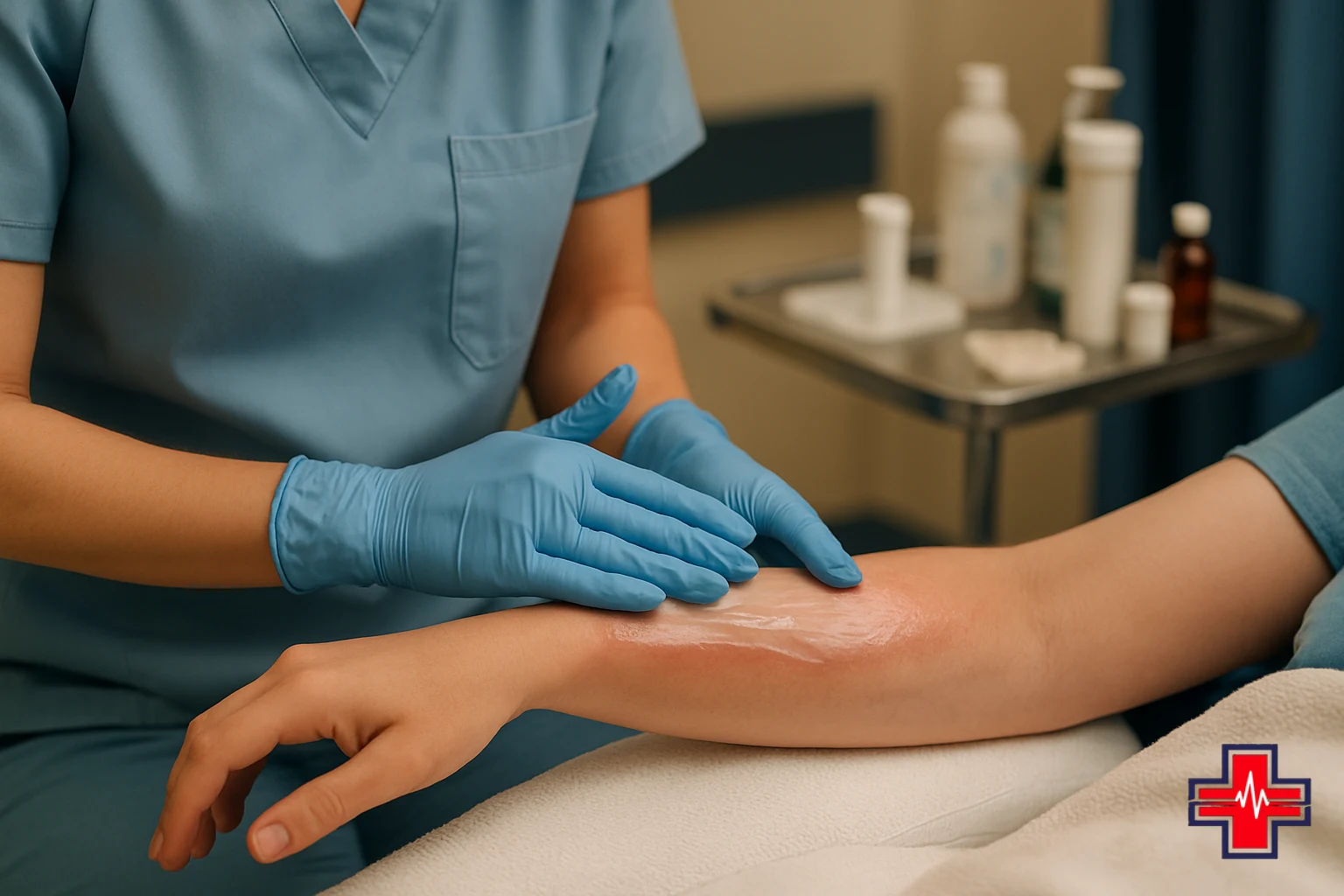
The first 10 to 20 minutes after a burn injury are critical. Proper immediate care reduces pain, limits inflammation, and sets the stage for uncomplicated healing. Follow these evidence-based steps for first-degree burn treatment at home:
- Cool the burn: Immerse the affected area in cool (not cold) running water for 10–20 minutes. This removes residual heat from the tissue and slows the inflammatory cascade. Do not use ice directly on the skin, as extreme cold can cause additional tissue damage. If running water is unavailable, a cool, damp cloth works well.
- Remove constrictive items: Take off jewelry, bracelets, watches, and tight clothing before swelling worsens. These items can restrict circulation if edema progresses.
- Assess the burn: Once cooled, gently inspect the area. Look for intact skin without blisters, which confirms a first-degree burn. If you see fluid-filled blisters or charred skin, seek emergency care immediately, as these indicate deeper burns.
- Dry gently: Pat the area dry with a clean, soft cloth. Avoid rubbing, which can irritate the delicate burned skin.
- Apply topical care: Use a fragrance-free, water-based moisturizer or aloe vera gel. Some people find cooling the moisturizer in a refrigerator (not freezer) provides additional relief. Avoid petroleum jelly, butter, oils, and greasy products, which trap heat and can worsen the burn.
- Pain relief: Over-the-counter ibuprofen or acetaminophen can help manage pain and reduce inflammation. Follow package directions for dosing.
Do not pop, drain, or pick at any blisters, should they develop—which is rare in true first-degree burns. This increases infection risk significantly.
Ongoing Wound Care and Healing
After the initial cooling and cleansing, ongoing wound care ensures smooth healing and minimizes discomfort over the next several days. Most first-degree burns heal completely within 3 to 7 days without intervention beyond basic home care.
During the healing phase, continue to:
- Keep the area clean: Gently wash with mild soap and cool water once or twice daily. Pat dry carefully.
- Moisturize regularly: Apply fragrance-free, hypoallergenic moisturizer three to four times daily, especially after bathing. This prevents excessive peeling and reduces itching.
- Protect from sun: Sun exposure during healing can darken the burn area and delay recovery. Wear loose, light-colored clothing that covers the burn, or apply a broad-spectrum sunscreen (SPF 30+) once the skin has cooled and is no longer acutely damaged. Avoid direct sun exposure for at least 1–2 weeks.
- Stay hydrated: Drink plenty of water to support skin healing from within.
- Avoid irritants: Stay away from chlorinated pools, hot baths, and harsh soaps, which can irritate healing skin.
- Manage itching: As the burn heals, itching is common. Resist the urge to scratch; instead, apply cool compresses or fragrance-free lotion. If itching is severe, consult a healthcare provider.
Peeling is a normal part of healing and usually begins 2 to 3 days after the injury. Do not force or pick off peeling skin; let it shed naturally. Gentle moisturizing supports this process without disrupting healing tissues beneath.

When to Seek Emergency Room Care
If you are experiencing a life-threatening emergency, call 911 or go to the nearest emergency room immediately.
Although most first-degree burns are managed safely at home, certain situations warrant a visit to ER Of Fort Worth or your nearest emergency room. Seek immediate care if:
- The burn covers a large area: First-degree burns affecting more than 10–15% of the body surface (a rough estimate: an adult's hand equals about 1% of body surface) should be evaluated by a medical professional to assess for dehydration and systemic complications.
- The burn involves the face, hands, feet, genitals, or major joints: These areas are prone to complications and require specialized assessment. Burns on the face may affect breathing or vision; hand and foot burns can limit function if scarring occurs.
- Signs of infection develop: Increased redness beyond the original burn boundary, warmth, pus, foul odor, or red streaks extending from the burn indicate bacterial infection. IV antibiotics ER services may be necessary.
- Severe pain not controlled by over-the-counter medication: Unbearable pain may indicate deeper tissue involvement than initially apparent.
- The skin appears charred, white, or leathery: These signs indicate second-degree or deeper burns, not first-degree.
- The burn occurred in an infant or very young child: Young children's skin is more fragile; pediatric emergency care can ensure safe evaluation and treatment.
- The burn resulted from a chemical, electrical, or enclosed-space fire: These mechanisms may cause hidden deep burns or inhalation injury.
- The patient has underlying medical conditions: Diabetes, immunosuppression, or circulation problems increase infection risk and warrant professional evaluation.
Residents of Fort Worth, Keller, Alliance, Saginaw, Haslet, Watauga, Roanoke, North Richland Hills, Haltom City, Bedford, Southlake, Grapevine, and Flower Mound can access Fort Worth emergency room services 24/7 for urgent burn assessment. ER physicians can perform blood tests ER services to assess for infection, provide stronger pain relief, and ensure the burn has not been misclassified.
Prevention Tips for Superficial Burns
Preventing first-degree burns—especially sunburns—is more effective than treating them afterward. Simple precautions can significantly reduce your risk of thermal injury:
- Sunscreen and sun-protective clothing: Apply broad-spectrum sunscreen with SPF 30 or higher 15 minutes before sun exposure, and reapply every 2 hours or after swimming. Wear lightweight, long-sleeved clothing, hats, and UV-blocking sunglasses during peak sun hours (10 a.m. to 4 p.m.), especially during Fort Worth's hot summers.
- Avoid direct sun during peak hours: Plan outdoor activities for early morning or late afternoon when UV intensity is lower.
- Check water temperature: Test bathwater with your elbow or a thermometer before immersing a child. Hot water can cause instant first-degree or deeper burns.
- Keep flammable items away from heat sources: Store loose clothing, kitchen towels, and other combustibles away from stoves, candles, and grills.
- Use appropriate oven and cookware handles: Turn pan handles inward on the stovetop, and use oven mitts when handling hot cookware.
- Supervise children near heat: Young children may not understand burn hazards. Constant vigilance prevents many accidental burns.
- Maintain working smoke and fire alarms: Early detection of fires reduces the likelihood of severe burns.
- Know first-aid basics: Families who understand proper first-degree burn treatment respond faster and more effectively in emergencies.
Frequently Asked Questions
See the FAQ section below for answers to common questions about first-degree burn treatment and care.
Frequently Asked Questions
How long does a first-degree burn take to heal?
Most first-degree burns heal within 3 to 7 days without complications. Healing time depends on the size of the burn, the individual's age, and adherence to proper wound care. Peeling may continue for several days after initial recovery, and skin sensitivity to sun may persist for weeks.
Can a first-degree burn scar?
True first-degree burns rarely cause scarring because they affect only the epidermis, which regenerates completely. However, if the burn is misclassified and involves deeper skin layers, or if infection occurs, scarring risk increases. Proper wound care and sun protection during healing help prevent post-inflammatory hyperpigmentation.
Is it safe to use ice on a first-degree burn?
No—avoid direct ice application. Ice can cause additional tissue damage and trigger excessive vasoconstriction. Instead, use cool (not cold) running water for 10–20 minutes. If ice is absolutely necessary, wrap it in a clean cloth and limit contact to short intervals.
What should I avoid when treating a first-degree burn?
Avoid petroleum jelly, butter, oils, greasy ointments, toothpaste, soy sauce, and other home remedies that trap heat and can worsen the burn or increase infection risk. Do not pop blisters (if they develop), apply ice directly, or expose the burn to direct sunlight during the first 1–2 weeks of healing.
When should I go to the ER for a first-degree burn?
Seek emergency care if the burn covers a large area, affects the face or joints, shows signs of infection (increased redness, pus, warmth), occurs in a very young child, or involves areas at high risk for complications. When in doubt, contact ER Of Fort Worth for guidance—our 24/7 physicians can assess the injury quickly.
Is sunburn considered a first-degree burn?
Yes, most sunburns are first-degree burns caused by ultraviolet (UV) radiation rather than direct heat. They follow the same healing pattern and respond to the same home-care strategies: cooling, gentle cleansing, moisturizing, and sun protection during recovery.