
Do ERs Do Allergy Testing? ER vs. Allergist
If you're experiencing a severe allergic reaction, an emergency room can provide immediate relief—but emergency rooms don't perform comprehensive allergy testing. Understanding the difference between acute ER care and diagnostic allergy workup helps you get the right care at the right time.
In This Article
- What Emergency Rooms Can Do for Allergies
- What ERs Cannot Do: Allergy Testing and Workup
- When to Visit the ER for Allergic Reactions
- ER Diagnosis vs. Allergist Testing: Key Differences
- Allergist Evaluation and Comprehensive Workup
- Fort Worth Allergy Care Resources and Next Steps
- Frequently Asked Questions
⚡ Key Takeaways
- ERs treat acute allergic reactions with medications and monitoring but do not perform allergy skin tests or blood-based allergy testing.
- Emergency rooms diagnose allergies clinically based on symptoms and history, while allergists conduct comprehensive allergy workup testing.
- Severe allergic reactions requiring epinephrine, IV steroids, or airway support are true ER emergencies and should be treated immediately.
- For non-emergency allergy evaluation, rash investigation, or ongoing management, schedule an appointment with an allergist or primary care doctor.
- ER Of Fort Worth offers 24/7 care for acute allergic reactions and can refer you to specialists for long-term allergy management.
What Emergency Rooms Can Do for Allergies
Emergency rooms excel at rapid diagnosis and acute treatment of allergic reactions. When you arrive at an ER in Fort Worth—whether at ER Of Fort Worth or a hospital emergency department—the clinical team will assess your symptoms, review your medical history, and identify the likely allergen based on your account of what triggered the reaction and the physical findings they observe.
Acute allergic reaction care includes:
- Antihistamines (oral or IV): Medications like diphenhydramine or cetirizine reduce itching, swelling, and systemic symptoms.
- Corticosteroids: IV or oral steroids calm inflammation and reduce the risk of biphasic reactions (a delayed second wave of symptoms).
- Epinephrine: For anaphylaxis (severe, life-threatening reaction), IM epinephrine is administered immediately to reverse airway swelling and cardiovascular collapse.
- Oxygen and airway support: If breathing is compromised, supplemental oxygen or intubation may be necessary.
- IV fluids: For dehydration or shock associated with severe reactions.
- Monitoring: Continuous observation to watch for delayed symptoms or complications.
An ER physician can clinically diagnose an allergic reaction—for example, "acute urticarial reaction to shellfish" or "contact dermatitis from latex"—based on timeline, appearance, and your description. However, clinical diagnosis is not the same as allergy testing.
What ERs Cannot Do: Allergy Testing and Workup
Emergency rooms do not perform allergy testing. The two main allergy testing modalities—skin testing and blood-based serology—require specialized equipment, trained allergists, and time that an acute ER setting does not support.
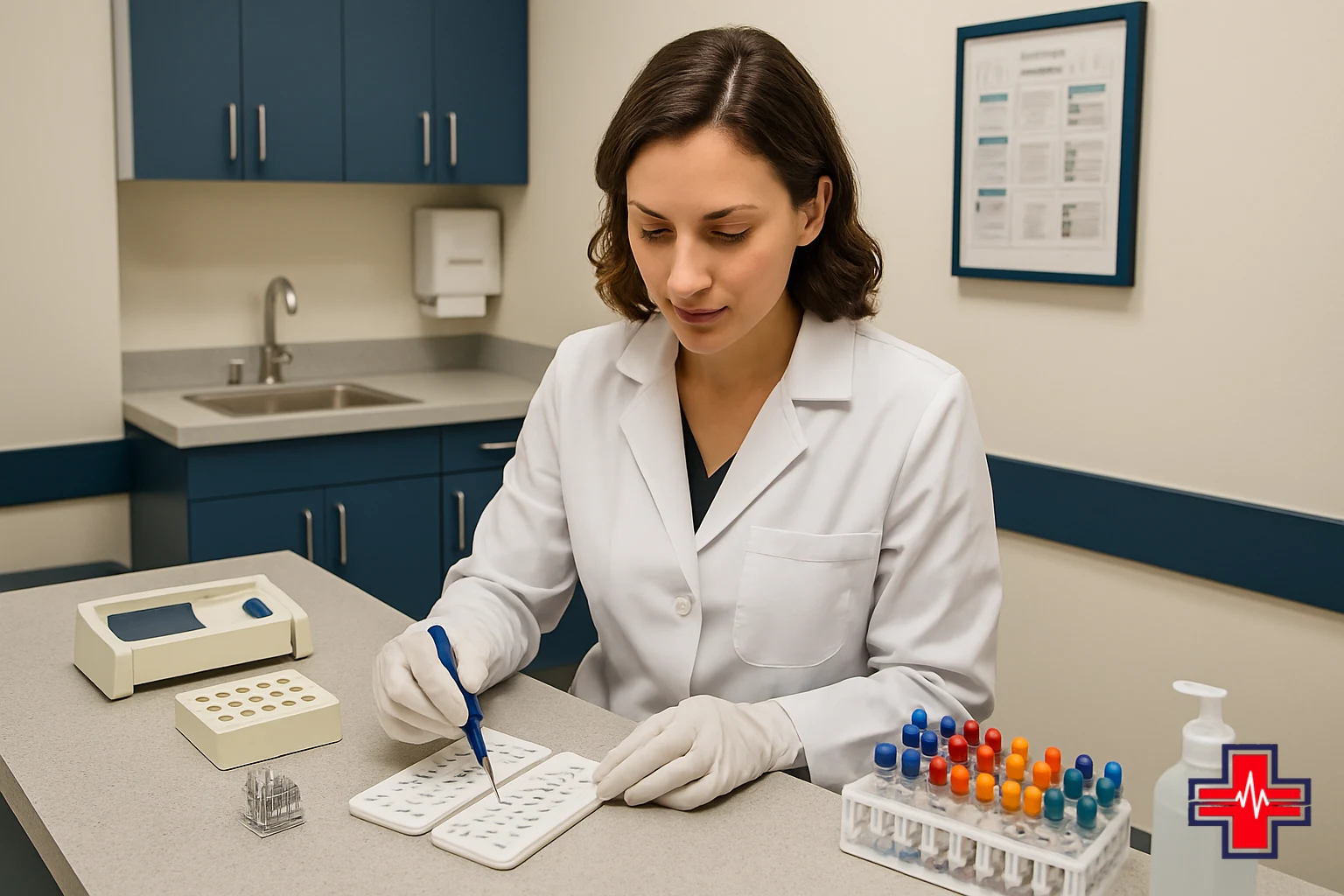
Skin allergy tests involve placing tiny amounts of allergen extracts on or just under the skin and waiting 15–20 minutes to observe reactions. These tests must be performed and interpreted by an allergist and require the patient to be off antihistamines for several days beforehand—something an ER patient who just received antihistamine therapy would not be able to do immediately.
Blood allergy tests (specific IgE testing) measure antibodies to individual allergens in a laboratory setting. Results take days to weeks and must be ordered and interpreted in the context of a comprehensive allergy history—not a quick ER visit.
Additionally, ERs typically do not:
- Maintain panels of allergen extracts for skin testing.
- Have allergists on staff to interpret specialized tests.
- Schedule follow-up testing or long-term management.
- Perform oral challenges or other provocation tests.
- Develop detailed allergy action plans or immunotherapy protocols.
Instead, the ER stabilizes you and refers you to an allergist for comprehensive evaluation and testing.

When to Visit the ER for Allergic Reactions
If you are experiencing a life-threatening emergency, call 911 or go to the nearest emergency room immediately.
Seek ER care for allergic reactions involving:
- Difficulty breathing, wheezing, or stridor: Indicates airway swelling or anaphylaxis.
- Swelling of lips, tongue, or throat: Can obstruct the airway rapidly.
- Chest pain or pressure: May signal anaphylactic shock or cardiac involvement.
- Dizziness, fainting, or confusion: Signs of severe hypotension or shock.
- Severe itching and widespread hives that do not improve with home treatment: Could progress to anaphylaxis.
- Angioedema (deep-tissue swelling) affecting the face or extremities.
- Any reaction after being stung by an insect or exposed to a medication you've never taken before.
- Reactions in infants or very young children: Requires pediatric assessment; visit Pediatric Emergency Care facilities like ER Of Fort Worth.
Mild to moderate reactions—isolated hives without respiratory symptoms, mild itching, or localized swelling—can often be managed at home with antihistamines or urgent care, but call your primary care doctor if symptoms worsen or you're unsure.
ER Diagnosis vs. Allergist Testing: Key Differences
Understanding the distinction between ER diagnosis and allergist testing clarifies why you may need both professionals at different times.
ER Clinical Diagnosis: Based on acute presentation, timeline, and symptoms. An ER physician might say, "Your symptoms are consistent with a reaction to the antibiotic you started yesterday." This is useful for immediate treatment but doesn't confirm the specific allergen with precision or predict future reactions to related medications.
Allergist Diagnostic Testing: Uses objective, reproducible tests to identify specific allergens. Skin prick testing or blood serology can confirm whether you are sensitized to penicillin, peanuts, dust mites, or pollen—and at what level. This allows the allergist to:
- Confirm suspected allergens.
- Identify unsuspected allergens (e.g., cross-reactions).
- Quantify the severity of sensitization.
- Recommend allergen avoidance strategies tailored to your profile.
- Discuss immunotherapy (allergy shots or sublingual tablets) if appropriate.
For example, if you had allergic reactions to an antibiotic in the ER, the ER can treat it acutely. An allergist can later test you against multiple antibiotics in the same drug family to help you and your doctor choose safe alternatives for future infections.
Allergist Evaluation and Comprehensive Workup
After an ER visit for an allergic reaction, your ER physician will typically recommend follow-up with an allergist for comprehensive evaluation. An allergist's workup includes:
- Detailed history: Onset, timing, triggers, associated symptoms, family history, and previous reactions.
- Physical examination: Assessment of skin, lungs, and overall allergic disease burden (eczema, asthma, rhinitis).
- Skin testing or blood tests: Objective identification of specific allergens.
- Pulmonary function tests (if asthma or respiratory involvement): Spirometry or peak flow measurement.
- Allergy action plan: Written guidance for avoiding allergens and managing reactions at home.
- Medication review: Recommendations for antihistamines, decongestants, or inhaled corticosteroids for ongoing allergic symptoms.
- Immunotherapy discussion: Whether allergy shots, sublingual tablets, or biologic medications are appropriate.
For residents of Fort Worth, Keller, Saginaw, Haslet, Watauga, Roanoke, North Richland Hills, Haltom City, Bedford, Southlake, Grapevine, and Flower Mound, allergists are available through hospital-affiliated clinics, private practices, and integrated care systems. Your primary care physician can refer you, or you can contact your insurance provider for in-network allergists.
Fort Worth Allergy Care Resources and Next Steps
If you have experienced an allergic reaction and visited the ER at ER Of Fort Worth or another emergency facility, the next step is scheduling a follow-up appointment with an allergist or your primary care doctor within 1–2 weeks. Bring a summary of your ER visit, medication list, and a written account of what triggered the reaction.
For urgent but non-life-threatening allergy concerns—such as persistent hives, seasonal allergic rhinitis, or mild rash—consider visiting an urgent care clinic or scheduling a same-day appointment with your primary care provider rather than the ER. This keeps ER resources available for true emergencies and may be faster for non-acute issues.
Residents seeking allergic reactions evaluation can benefit from the 24/7 availability of ER Of Fort Worth for acute symptoms, then transition to outpatient allergy care for long-term management. Online check-in at ER Of Fort Worth speeds up the process if you need urgent evaluation.
If you are uncertain whether your symptoms warrant an ER visit or can wait for an allergist appointment, call the ER physician line or visit urgent care for guidance. Erring on the side of caution for breathing problems, swelling of the airway, or shock is always appropriate.
Frequently Asked Questions
Do emergency rooms do allergy testing?
No, ERs do not perform allergy testing. Emergency rooms treat acute allergic reactions with medications and monitoring but do not conduct skin prick tests or blood-based allergy serology. Allergists perform these specialized diagnostic tests in outpatient clinics.
Can an ER diagnose an allergy?
Yes, clinically. An ER physician can diagnose a reaction based on your symptoms, timeline, and history—for example, "allergic reaction to shellfish." However, this clinical diagnosis is not the same as objective allergy testing. Confirmation and comprehensive workup require an allergist.
When should I go to the ER for an allergic reaction?
Visit the ER if you experience difficulty breathing, swelling of the lips or throat, chest pain, dizziness, widespread hives that don't improve, or any sign of anaphylaxis. Mild rashes or itching alone can usually be managed at home or in urgent care.
What's the difference between an ER visit and seeing an allergist?
The ER treats acute, life-threatening reactions immediately with medications and monitoring. An allergist provides comprehensive evaluation, objective testing to identify specific allergens, and long-term management plans including avoidance strategies and immunotherapy options.
After an ER visit for an allergic reaction, should I see an allergist?
Yes. After ER treatment of any significant allergic reaction, follow up with an allergist for testing and comprehensive workup. This helps identify the exact allergen, guides future prevention, and supports safe medication and food choices.
How long does allergy testing take?
Skin prick testing results appear in 15–20 minutes. Blood tests take several days to a week for results. Most allergists allow 30–60 minutes for a full appointment including testing and interpretation.