What Happens During a Hospital Observation Stay?
A hospital observation stay differs from a full hospital admission—it's a period of monitored care lasting typically 8–24 hours to determine whether you need inpatient hospitalization or can safely go home. Understanding what happens during observation can reduce anxiety and help you prepare for this common medical scenario.
In This Article
⚡ Key Takeaways
- Observation stays last 8–24 hours and allow physicians to monitor your condition closely before deciding on admission or discharge.
- You'll receive continuous or frequent vital monitoring, diagnostic tests, and repeat clinical assessments during your observation period.
- ER staff will explain your observation status, review your medical history, and discuss what triggered the need for monitored care.
- A clear discharge plan or inpatient admission decision is made before you leave, with written instructions and follow-up care guidance.
- Observation beds differ from inpatient hospital rooms but still provide comfortable, private spaces with bathroom access and meal options.
What Is a Hospital Observation Stay?
A hospital observation stay is a designated period of monitored medical care, distinct from both emergency room treatment and full inpatient hospital admission. During observation, you remain under the care of hospital physicians and nursing staff in a dedicated observation unit, where your vital signs, symptoms, and response to treatment are tracked closely. This middle-ground approach helps physicians gather enough clinical information to make a confident decision: should you be discharged home with outpatient follow-up, or do you require admission to the hospital for ongoing inpatient care?
Observation stays typically last between 8 and 24 hours, though some may extend slightly longer depending on your condition and the physician's clinical judgment. Common reasons for observation include chest pain of unclear origin, moderate asthma exacerbations, suspected infections requiring monitoring, dehydration requiring IV fluids, or recent falls or injuries that warrant close neurological observation. Unlike an inpatient admission, an observation stay does not automatically qualify as a hospital stay for insurance billing purposes, which is an important distinction to understand before your visit.
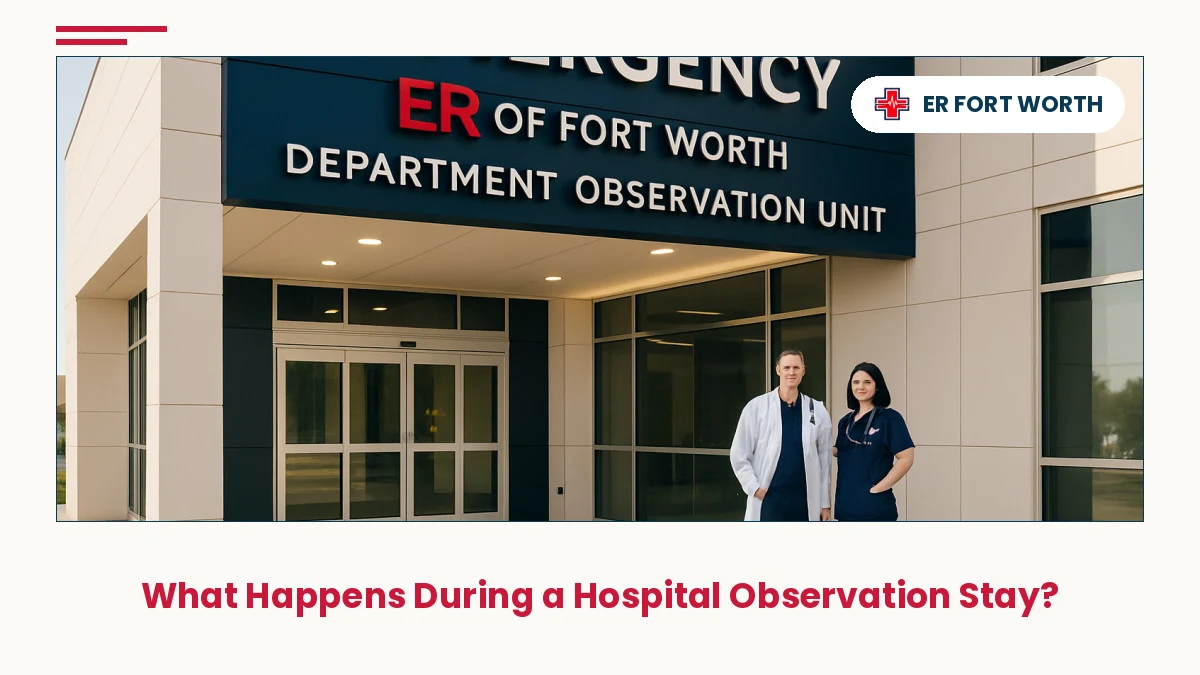
For residents of Fort Worth, Keller, Alliance, Saginaw, and surrounding North Texas communities, ER Of Fort Worth provides 24/7 observation services with board-certified emergency medicine physicians and experienced nursing staff trained in continuous patient monitoring.
Admission and Intake: First Steps
When you arrive at the emergency department and the physician determines you need observation, the nursing team initiates a formal admission process. You'll be transferred from the main ER treatment area to a dedicated observation bed, typically located in a designated observation unit within or adjacent to the emergency department. This transition marks the start of your monitored stay.
During intake, a nurse or intake specialist will conduct a comprehensive review of your medical history. Be prepared to discuss your current symptoms, past medical conditions, medications (bring a list or your medication bottles), allergies, any recent surgeries or hospitalizations, and your reason for today's visit. This information is entered into the hospital's electronic medical record and shared with all physicians and staff caring for you. If you have not already completed registration paperwork, this will be done before observation begins.
The admitting nurse will also verify your insurance information, explain your observation status clearly (noting that this is different from a full hospital admission), and discuss what you can expect during your stay. You may be asked to change into a hospital gown or be permitted to remain in your own clothing, depending on the reason for observation and your facility's protocols. Valuables should be stored securely or given to a family member, and you'll receive information about where belongings can be kept during your stay.
Continuous Monitoring and Vital Signs
The cornerstone of observation care is regular and frequent vital sign monitoring. Nursing staff will check your heart rate, blood pressure, respiratory rate, oxygen saturation (via a pulse oximeter on your finger), and body temperature. Depending on your condition, these vital signs may be checked every 30 minutes to 4 hours—more frequently if you are unstable or have a condition requiring close hemodynamic oversight.
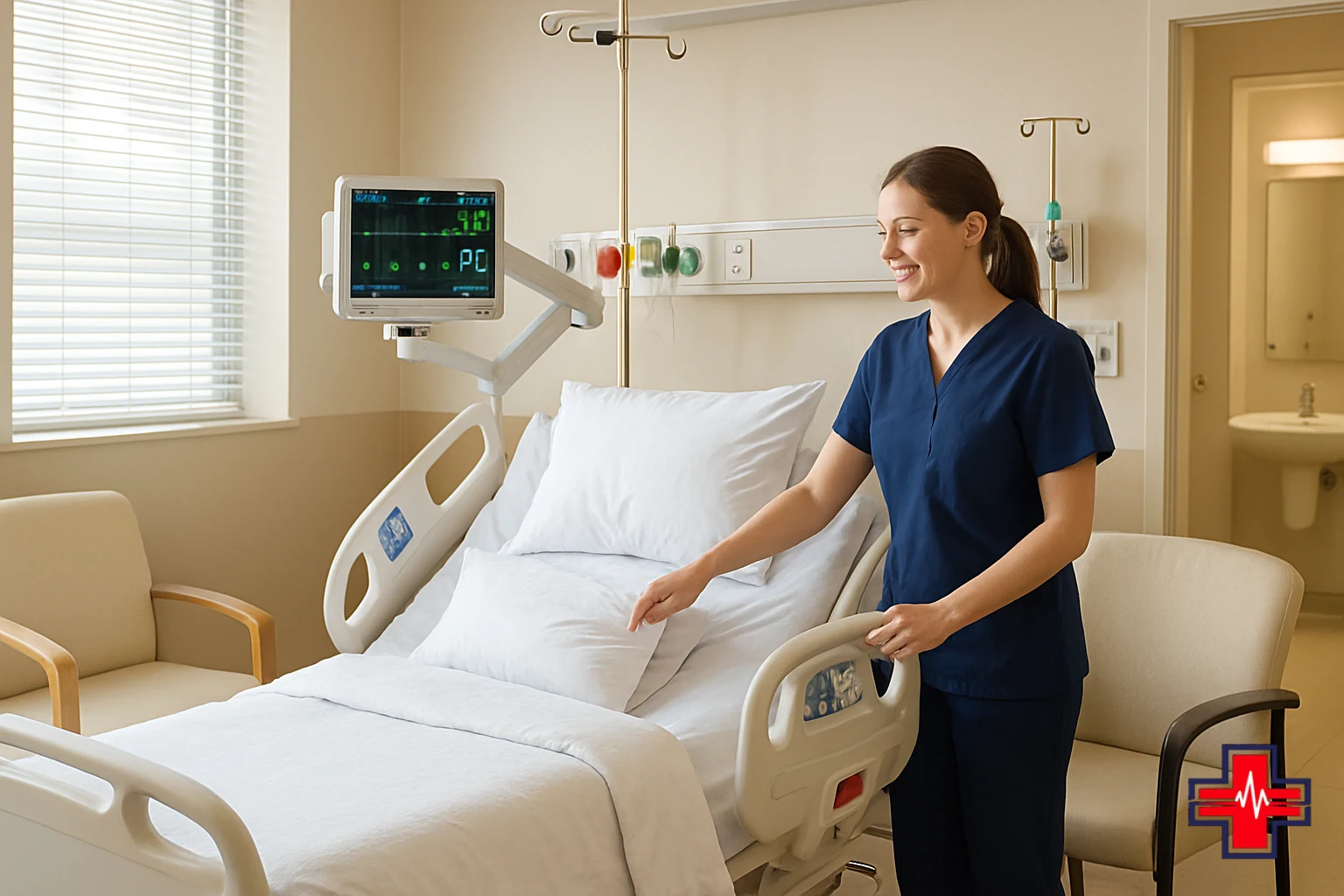
Many observation patients are placed on continuous cardiac monitoring, which displays your heart rhythm on a bedside monitor visible to nursing staff. If you experience chest pain or have a history of arrhythmias, this monitoring is standard. Pulse oximetry may also be continuous, especially if you have shortness of breath or pneumonia concerns.
You'll be encouraged to use the call button freely if you feel worse, experience new symptoms, or need pain management. Nursing staff will respond promptly to assess any changes. If your vital signs become unstable or your condition worsens significantly, the physician will be notified immediately and your care plan may change—either escalating to full inpatient admission or intensifying observation interventions.
Throughout your stay, you may feel tethered to monitors and IV lines, but this continuous oversight is precisely what allows physicians to detect complications early and adjust treatment as needed. The safety benefit of close monitoring often outweighs the mild inconvenience of bedside equipment.
Diagnostic Testing During Observation
Diagnostic testing is a central component of observation care. The specific tests ordered depend on your presenting complaint and clinical picture. For example, a patient admitted with fever may receive blood tests (including a complete blood count and metabolic panel) to check for infection and organ function, while a patient with chest pain undergoes serial EKGs and troponin measurements to rule out heart attack.
Common observation tests include:
- Laboratory work: Blood cultures, urinalysis, urinalysis for UTI screening, complete metabolic panel, and lactate level to assess tissue perfusion
- Imaging: Chest X-rays, abdominal ultrasound, or CT scans if the clinical presentation warrants radiological evaluation
- EKG: Electrocardiograms are repeated at intervals (e.g., at 0, 3, and 6 hours) for cardiac chest pain to detect evolving ischemia
- Ultrasound or sonography: To assess for blood clots, gallbladder disease, or other structural abnormalities
Results typically arrive within hours. Some tests (like troponin) may be run in serial fashion—repeated at intervals—to track trends rather than relying on a single result. Nursing staff will inform you when results are available and explain findings in plain language. If abnormalities are discovered, the physician will discuss next steps and may adjust your care plan or recommend admission.
The rationale behind observation is often to gather this diagnostic information and observe your clinical response over time, rather than making a discharge or admission decision in the acute phase when the picture may be unclear.

Your Observation Room: Comfort and Amenities
Observation rooms are designed to balance clinical function with patient comfort. Most are private or semi-private spaces equipped with a monitored bed, bedside table, chair (often convertible for a family member to rest), and a private or shared bathroom. Unlike the curtained bays typical of main emergency departments, observation rooms offer greater privacy and a quieter environment conducive to rest and recovery.
Standard amenities include:
- Television and entertainment: Most rooms have a TV with cable or streaming access, and you may request reading materials or other diversions
- Phone access: You can make and receive calls (cell phones are typically permitted in observation units)
- Bathroom facilities: Private or semi-private bathrooms with toilet, sink, and shower access; nursing staff will advise on mobility restrictions if you're on IV therapy
- Meals and beverages: Depending on your condition and any required fasting (e.g., before certain imaging or procedures), you may be offered hospital meals, snacks, and beverages
- Climate control: Adjustable lighting and temperature in your room
- Visitor access: Family and friends are usually permitted to stay with you during observation; check facility policies on visiting hours and number of visitors
If you need additional pillows, blankets, or other comfort items, ask your nurse. The goal is to make your observation period as tolerable as possible while maintaining the clinical monitoring necessary for your safety.
Physician Assessment and Discharge Planning
Throughout your observation stay, the attending emergency medicine physician will reassess you regularly—typically every 4–6 hours—or more frequently if your condition changes. During these evaluations, the doctor reviews your vital signs, examination findings, test results, and symptom trajectory. This sequential assessment is the key advantage of observation: seeing how you respond to initial treatment and monitoring over time provides clarity that may not be apparent during your initial ER evaluation.
By the end of your observation period, the physician will reach one of three conclusions:
- Safe for discharge: Your condition has improved, tests are reassuring, and you can safely continue recovery at home with outpatient follow-up
- Admission to hospital: You require ongoing inpatient care, and you'll be admitted to a hospital bed in a medical or surgical unit
- Extended observation: In rare cases, observation may be extended by a few hours if the clinical picture remains uncertain but is trending favorably
Before discharge, you'll receive written instructions detailing your diagnosis (if confirmed), prescribed medications, activity restrictions, warning signs that require urgent return to the ER, and details of any scheduled follow-up appointments with your primary care physician or a specialist. The nurse will review these instructions verbally and answer any questions. If you've received IV antibiotics or other hospital-administered medications, you'll be told whether to continue oral antibiotics at home and for how long.
For residents of Haslet, Watauga, Roanoke, North Richland Hills, and other North Texas communities, our physicians at ER Of Fort Worth prioritize clear communication before discharge, ensuring you understand your diagnosis, treatment, and next steps.
After Your Observation Stay: Follow-Up Care
Your observation stay is the beginning, not the end, of your medical care. Whether you're discharged or admitted, continuity of care is essential. If you are discharged, you'll be given a summary document (sometimes called a discharge summary or after-visit summary) that outlines:
- Your reason for the ER visit
- Tests performed and results
- Diagnoses reached
- Medications prescribed or continued
- Follow-up appointments scheduled (e.g., with your primary care doctor or a specialist)
- Instructions for wound care, activity, diet, or medication use
- Red flag symptoms that should prompt an immediate return to the ER (e.g., severe chest pain, difficulty breathing, loss of consciousness)
Make a copy of this summary for your records and bring it to any follow-up appointments. If blood clot risk is a concern or you've been diagnosed with a specific condition requiring outpatient imaging or procedures, your discharge summary will detail these requirements.
If you have questions after discharge, don't hesitate to contact your primary care physician or call the ER. For residents of Haltom City, Bedford, Southlake, Grapevine, and Flower Mound seeking continuity of care following observation, your primary care physician or local urgent care clinic can review your ER records and provide additional guidance.
Insurance billing for observation stays can be complex; many insurance plans classify observation differently from inpatient admission. If you receive a bill or have questions about coverage, contact your insurance company or the hospital's billing department with your visit details.
Frequently Asked Questions
How long does a typical hospital observation stay last?
Most observation stays last between 8 and 24 hours. The length depends on your condition, how quickly diagnostic results return, and how you respond to treatment. Your physician will determine the appropriate duration based on clinical judgment and facility protocols.
Will I be charged for a hospital observation stay?
Observation stays are billed separately from full inpatient admissions and may have different insurance coverage rules. We cannot predict your out-of-pocket costs; contact your insurance company with your observation status to understand your coverage. The hospital's billing department can also provide estimates after your visit.
Can family members stay with me during observation?
Yes, most facilities permit family members to remain with you during observation to provide support and help monitor your needs. Check with the nursing staff about visiting hours, number of visitors permitted, and whether family can rest in the room overnight.
What if my condition worsens during observation?
Nursing staff monitor you continuously, and you can use the call button at any time. If your condition deteriorates, the physician will be notified immediately. Your care plan may be escalated, including transition to full hospital admission if needed. This is precisely why observation care is safer than sending you home prematurely.
Will I need to fast or restrict fluids during observation?
Fasting requirements depend on your condition and any planned tests or procedures. Your nurse will inform you of any dietary restrictions. In most observation cases, you can eat light meals and drink fluids unless specifically instructed otherwise.
What happens if tests are abnormal during my observation stay?
If test results show abnormalities, your physician will discuss findings with you and explain the clinical significance. This may lead to additional testing, treatment adjustments, or a recommendation for hospital admission. Abnormal results are often the very reason observation is valuable—catching problems before you leave the hospital.