
Can You Go Home From Observation Unit Same Day?
If you or a loved one has suffered a head injury or fall and been admitted to an observation unit, you're likely wondering how long you'll need to stay. The answer depends on medical evaluation, symptom progression, and your physician's assessment—and yes, same-day discharge is possible in many cases.

In This Article
- What Is an Observation Unit?
- Can You Go Home Same Day From Observation?
- Concussion Observation and Neuro Checks
- Head Trauma Monitoring and Discharge Criteria
- Fall Observation Protocol and Safety Assessment
- What You Need Before Leaving the Observation Unit
- Post-Discharge Care and Red Flags
- Frequently Asked Questions
⚡ Key Takeaways
- Observation unit discharge timing is determined by serial neurological assessments, not arbitrary timeframes, and same-day release is medically appropriate when stability is confirmed.
- Concussion observation protocols typically involve repeated neuro checks every 1–2 hours; if you remain asymptomatic and stable, earlier discharge becomes feasible.
- Fall and trauma observation focuses on ruling out intracranial bleeding, spinal injury, and delayed symptom onset, which may require longer monitoring even if you feel well.
- Your discharge depends on physician clearance, not bed availability or insurance pressure—emergency medicine follows evidence-based protocols that prioritize safety.
- Before leaving, ensure you receive written discharge instructions, emergency warning signs, and a clear follow-up plan with your primary care provider.
What Is an Observation Unit?
An observation unit is a specialized hospital or emergency room setting designed for short-term medical monitoring—typically 4 to 24 hours—when a condition requires assessment but doesn't warrant full hospital admission. Unlike an inpatient bed, observation is meant to be temporary, with the goal of either discharge to home or escalation to higher-level care based on clinical findings.
Observation units serve patients across the Dallas–Fort Worth area, including Fort Worth, Keller, Alliance, Saginaw, Haslet, Watauga, Roanoke, North Richland Hills, Haltom City, Bedford, Southlake, Grapevine, and Flower Mound. At Fort Worth Emergency Room (ER Of Fort Worth), the observation model allows physicians to perform repeated assessments, lab work, and imaging without the cost and length-of-stay implications of full hospital admission. This is especially valuable for patients with head injuries, falls, or trauma who need serial evaluation to rule out delayed complications.
The key distinction: observation is diagnostic and monitoring, not necessarily therapeutic admission. You are under continuous or periodic clinical oversight, with staff prepared to escalate care or discharge you home once safety criteria are met.
Can You Go Home Same Day From Observation?
Yes—same-day discharge from an observation unit is absolutely possible and common, particularly in mild-to-moderate cases. Whether you can leave on the same day depends on several evidence-based factors:
- Stability of vital signs: Blood pressure, heart rate, respiratory rate, and temperature remain normal or return to baseline.
- Neurological status: Serial neuro checks show no decline, no new symptoms, and normal mentation.
- Symptom progression: You remain free of severe headache, vomiting, confusion, or loss of consciousness during the observation window.
- Imaging and lab results: CT scans, blood tests, or other diagnostics do not reveal acute injury.
- Physician assessment: Your attending physician determines that ongoing monitoring will not change management and that you meet safe-discharge criteria.
The observation period is not fixed by time alone—it is driven by clinical judgment. A patient who arrives at ER Of Fort Worth after a minor fall at 2 p.m. and passes all neuro checks by 4 p.m. can be discharged that same day if the clinical picture supports it. Conversely, a patient admitted at 10 p.m. who shows continued headache or mild altered mental status may be monitored longer, potentially into the next morning, because the physician wants to ensure no delayed intracranial complications develop.
Concussion Observation and Neuro Checks
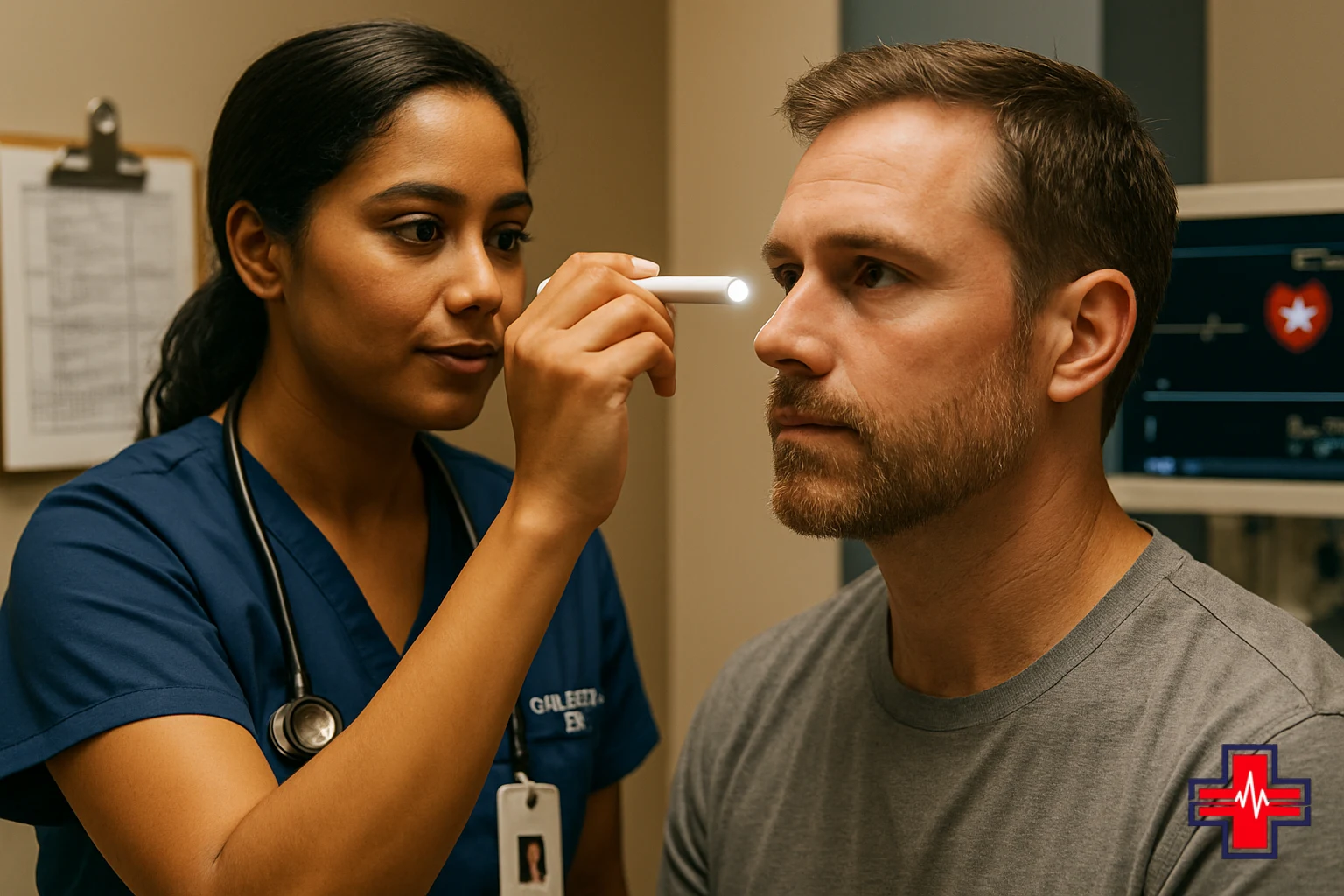
Concussions are a form of mild traumatic brain injury that require systematic observation to detect any worsening. The typical concussion observation protocol involves serial neurological checks—often called "neuro checks"—performed at regular intervals, typically every 1 to 2 hours depending on initial severity and physician preference.
During each neuro check, the clinical team assesses:
- Alertness and orientation: Are you awake and aware of person, place, time, and purpose?
- Pupil reactivity: Do your pupils constrict normally when light is shone in them?
- Speech and cognition: Is speech clear, and are you able to answer questions and follow commands?
- Motor and sensory function: Can you move all extremities, and is sensation intact?
- Headache, dizziness, nausea: Any progression or new onset of these symptoms?
If every check shows normal findings and you remain symptom-free, physicians may clear you for same-day discharge after 4 to 8 hours of observation. However, if any neuro check reveals decline—such as worsening confusion, new vomiting, or change in pupil size—further imaging (usually a repeat CT scan) and extended observation are warranted. Some patients with moderate concussions may be monitored overnight or admitted if they live alone or have limited support for home monitoring. Many practices now use evidence-based return-to-activity and return-to-play protocols, which guide recovery after discharge but do not necessarily extend the observation window.
Head Trauma Monitoring and Discharge Criteria
Head trauma monitoring in the observation unit is designed to identify evolving intracranial injury, such as epidural hematoma (bleeding between the skull and brain membrane) or subdural hematoma (bleeding under the dura). These conditions may develop over hours and present with delayed or progressive symptoms, which is why observation and repeat assessment are critical.
At ER Of Fort Worth and other 24/7 facilities, physicians use a combination of initial and repeat CT imaging, lab work, and clinical assessment to determine safety for discharge. Common discharge criteria for head trauma include:
- Normal or stable CT scan (no acute bleeding, no fracture)
- Glasgow Coma Scale (GCS) score of 15 (fully alert and oriented)
- No progressive headache, vomiting, or altered consciousness
- Ability to tolerate oral intake (if applicable)
- Clear understanding of home safety and warning signs
- Reliable follow-up either with primary care provider or neurology (if severe)
For fall observation patients in particular, imaging may also include a cervical spine (neck) check, especially if mechanism suggests potential spinal injury. A fracture or significant soft-tissue injury to the neck may necessitate longer observation, bracing, and specialist referral. Many fall patients—even elderly residents in Keller, Saginaw, Haslet, or other nearby communities—can be safely discharged same-day once spinal and head injury are ruled out and functional status is acceptable.

Fall Observation Protocol and Safety Assessment
Falls are the leading cause of nonfatal trauma in older adults and a common reason for observation unit admission across North Richland Hills, Haltom City, Bedford, and surrounding areas. The fall observation protocol extends beyond head injury assessment to include orthopedic, neurological, and functional evaluation.
A comprehensive fall assessment in the observation unit typically covers:
- Mechanism of injury: How did you fall? What caused loss of balance?
- Imaging: X-rays or CT for suspected fractures (hip, pelvis, ribs, vertebrae); head CT if loss of consciousness or head strike occurred.
- Neuro and spine checks: Spinal assessment for pain, tenderness, or neurological deficit.
- Orthopedic evaluation: Range of motion, strength, stability of joints.
- Medication review: New medications, anticoagulants, or others that might increase fall risk.
- Functional assessment: Can you safely walk, transfer, perform activities of daily living?
A patient who fell at home, struck their head but lost no consciousness, has a normal CT, clear spine imaging, and no fracture can often be discharged same-day once physicians confirm they are safe to ambulate and have appropriate home support. However, an elderly patient on anticoagulants (blood thinners) who struck their head may require extended or overnight observation due to higher risk of delayed intracranial bleeding, even if initial CT is normal.
Fall observation is not punitive—it reflects the medical reality that some injuries are not immediately apparent and that delayed complications can be life-threatening if unrecognized.
What You Need Before Leaving the Observation Unit
If you meet medical criteria for discharge from the observation unit, your physician will not release you until you have comprehensive discharge instructions and a clear safety plan. Before you leave ER Of Fort Worth or any observation facility, ensure you receive:
- Written discharge summary: Diagnosis, tests performed, results, and treatment given during observation.
- Medication list: Any new medications prescribed, dosages, and instructions.
- Activity restrictions: What physical activities or work should be avoided and for how long.
- Return precautions (red flags): Specific symptoms that warrant immediate return to the ER, such as severe headache, vomiting, confusion, weakness, or seizure.
- Follow-up appointment: Information on seeing your primary care physician, a specialist, or returning for a wound check if applicable.
- Discharge mode: Clear instructions on driving safety; if you received sedating medications, you should not drive for 12–24 hours and need a responsible adult to accompany you.
Many observation units provide printed patient education materials on concussion recovery, fall prevention, or post-trauma care. Ask for these and take them home. If you don't understand any part of your discharge plan, ask your nurse or physician before leaving.
Post-Discharge Care and Red Flags
Same-day discharge from observation does not mean you are "cleared" for all normal activity immediately. Recovery from head injury or trauma is a process, and your physician will have given you specific restrictions and a timeline for gradual return to full activity.
After discharge, watch carefully for warning signs that require immediate ER evaluation. If you experience any of the following, do not wait—call 911 or go to the nearest emergency room immediately:
- Severe headache that is progressively worsening
- Vomiting or persistent nausea
- Confusion, disorientation, or difficulty concentrating
- Slurred speech or difficulty speaking
- Weakness or numbness in arm or leg
- Difficulty walking or loss of balance
- Seizures or loss of consciousness
- Vision changes or inability to open eyes normally
- Fever above 104°F (especially if accompanied by headache or neck stiffness)
If you are a Fort Worth or nearby resident (Keller, Alliance, Grapevine, Southlake, Flower Mound, or other surrounding areas) and develop these symptoms after observation discharge, ER Of Fort Worth is a 24/7 facility ready to re-evaluate you immediately. Do not assume you are "fine" just because you were discharged—delayed complications, though uncommon, can occur.
Additionally, follow your physician's advice regarding:
• Return-to-work timelines (head injuries, especially concussions, may require cognitive rest)
• Return-to-sports or strenuous activity (gradual progression is recommended)
• Medication adherence and symptom tracking
• Follow-up appointments with your primary care doctor
If you live alone and were discharged after a significant head injury or fall, ask a family member or friend to check on you regularly for the first 24–48 hours. Continued surveillance by a trusted person can catch delayed symptoms early.
Frequently Asked Questions
How long does observation typically last after a head injury?
Observation for head injury typically lasts 4 to 12 hours, depending on severity and findings. Mild concussions with normal neuro checks may allow discharge within 4–6 hours; moderate injuries or those with initial imaging concerns may require overnight or extended observation. Discharge is based on clinical stability, not a set timeframe.
What if my neuro checks are normal but I still feel dizzy?
Mild dizziness or vertigo is common after head injury or concussion and does not automatically prevent discharge if formal neuro checks are normal. However, tell your physician about persistent dizziness—they may order additional testing (such as a balance or vestibular assessment) or adjust your activity restrictions. Discharge may be safe, but follow-up with your primary care provider is important.
Can I be discharged from observation at night or on a weekend?
Yes. ER Of Fort Worth is a 24/7 facility, and observation services operate around the clock. If you meet discharge criteria at 11 p.m. on a Saturday, you can be safely discharged. However, ensure you have reliable transportation and that your follow-up physician is accessible or that you have clear instructions for Monday morning contact.
Do I need an overnight hospital stay if I was on blood thinners when I fell?
Not automatically, but anticoagulant use (warfarin, apixaban, rivaroxaban, etc.) increases the risk of delayed intracranial bleeding even if initial CT is normal. Your physician may recommend extended or overnight observation and possibly a repeat CT scan in 6–12 hours to rule out evolving bleed. Each case is individualized based on fall mechanism and imaging findings.
What should I do if I develop severe headache after being discharged from observation?
Severe or progressively worsening headache after observation discharge is a red flag for delayed intracranial complication. Call 911 or go to the nearest emergency room immediately—do not wait. Do not drive yourself; have someone else drive you or call an ambulance. This symptom requires urgent re-evaluation.
Can I drive home after same-day discharge from observation?
Only if you have not received sedating medications and your physician explicitly clears it. Many observation protocols recommend avoiding driving for 12–24 hours after head injury or concussion, even if you feel well. Cognitive impairment may not be obvious to you. If you received any sedatives or pain medications, arrange for a responsible adult to drive you home.